When a rotator cuff tear occurs, patients may experience shoulder pain, weakness, and limited range of motion. Diagnosis relies on physical examination and imaging studies, and treatment options vary with the tear’s size and severity. These options range from rest and physical therapy to surgical repair. Here is more information on recognizing the symptoms of these injuries:
What Is a Rotator Cuff Tear?
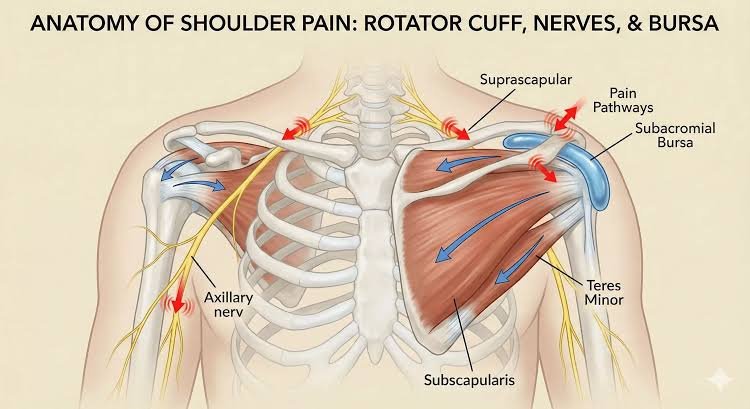
The rotator cuff is composed of four muscles and their associated tendons: the supraspinatus, infraspinatus, teres minor, and subscapularis. These structures stabilize the humeral head within the shoulder socket, and they also facilitate a wide range of arm movements. When one or more of these tendons are damaged, either partially or completely, the result is classified as a rotator cuff tear.
Rotator cuff tears may be classified as acute or degenerative. Acute tears result from sudden trauma, such as a fall on an outstretched arm or forceful lifting, whereas degenerative tears develop gradually from repetitive overhead activity or age-related tendon wear. Since tendon integrity naturally declines with age, patients over 40 are at higher risk for degenerative tears.
What Are the Symptoms?
Shoulder pain is a common symptom. It may present as a dull, deep ache that worsens with overhead activity, reaching behind the back, or lying on the affected side. Additional symptoms include:
- Clicking, popping, or crackling sensations during shoulder movement
- Progressive stiffness limiting range of motion
- Difficulty completing routine tasks such as combing hair or reaching across the body
How Are They Recognized?
Diagnosis begins with a thorough physical examination. The clinician assesses shoulder strength, range of motion, and pain provocation, and specific orthopedic tests are used to support these findings. Imaging studies confirm the diagnosis and establish tear severity. MRI offers detailed visualization of soft-tissue structures, which allows clinicians to distinguish partial from complete tears.
How Are Symptoms Managed?
Management depends on several factors; these include tear size, patient age, activity level, and functional goals. Conservative treatment is the standard first approach for partial tears or degenerative injuries in older, less active patients. This approach encompasses rest, activity modification, and structured physical therapy, which work together to strengthen the surrounding musculature and restore function. Corticosteroid injections may reduce pain and inflammation. They can allow for more productive participation in rehabilitation.
Surgical repair is indicated for complete tears and acute traumatic injuries. It may also be recommended when conservative management has not provided adequate relief. Arthroscopic techniques may be used. These methods allow for smaller incisions, and they facilitate a faster return to function, which is beneficial for active patients. Post-operative rehabilitation typically spans several months, and it plays an integral role in restoring strength and mobility following surgical repair.
Identify Your Symptoms Today
Recognizing the signs of a rotator cuff tear early helps prevent further tendon damage, and it expands the range of available treatment options. Pain, arm weakness, and restricted shoulder movement are the primary symptoms to monitor. If these are limiting daily activities or worsening over time, speak with your sports medicine provider to determine the most suitable course of action for your condition.
About the author : ahmadrazaguruu@gmail.com